The day I DIDN’T fly to Utah

It’s maybe a little odd to write a post on an aviation blog about not flying, but there has been a lot of talk about safety this year. Mike Patey’s recent impassioned video asks us all to serious consider NOT flying when more than one major risk factor exists (like IFR, night, or ice), and I think we need to have more conversations about good decision making. We don’t necessarily need to celebrate no-fly decisions but I’d much rather discuss with you my rationale for not flying than show up posthumously on blancolirio.

On June 2, 2023, I was hoping to fly into the Skypark Aviation Festival in Woods Cross, UT (KBTF). But early June isn’t quite summer yet in Colorado and Wyoming, and the forecast included low cloud decks and ICE. So I drove to Utah instead. Here’s why:

My only potentially viable route would take me north from Denver to Laramie, WY and then more or less follow I-80 to Salt Lake. Since the cloud decks across central WY were forecast to be quite low, I would need to file IFR. The minimum enroute altitudes (MEAs) across central WY can go as low as 10,000 ft on the Victor airways, but the lowest MEA into the Salt Lake valley is 12,000 ft. As you can see in the profile above, that’s right where moderate to severe icing was forecast to begin.

My #1 rule for flying IFR is “always have an exit strategy.” I looked at Evanston, WY as a possible escape route in the event I encountered ice. Along the route, Rock Springs (KRKS) and Fort Bridger (KFBR) were also viable, having both instrument approaches and weather forecast above approach minimums. However, I could figure on flying at least 10 minutes in ice if I encountered it at all, and then there is the question of how to get a rental car in a small WY town to finish the trip to Utah.

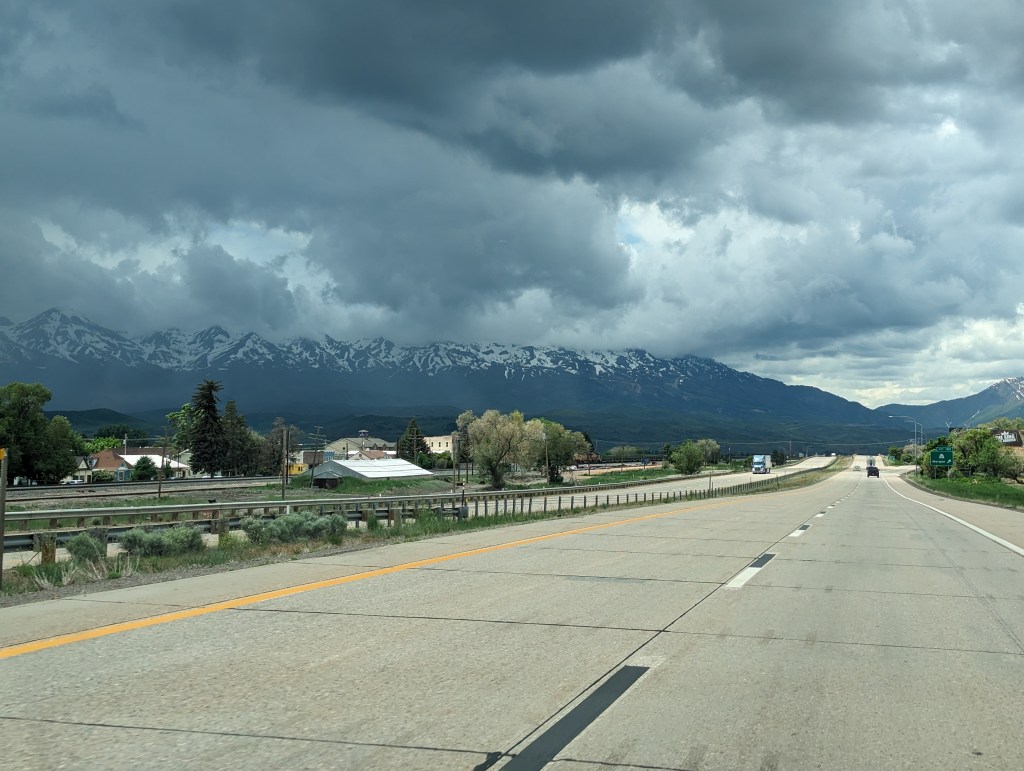
So I elected to drive instead. It was an early morning, but as I got to western WY and began to encounter the weather, I was sure glad I did. Note how the clouds sit right on top of the mountains east of Salt Lake. Once I passed Evanston, if there were indeed moderate icing up there, it would be a race against time.

It’s better to be on the ground wishing you were in the air than in the air wishing you were on the ground.

Aviation proverb

In my case, I wasn’t even wishing I was the air! Since it was still early summer, normally barren Wyoming was lush green, and I enjoy the wide open spaces and relative quiet afforded by an 8-hr road trip.

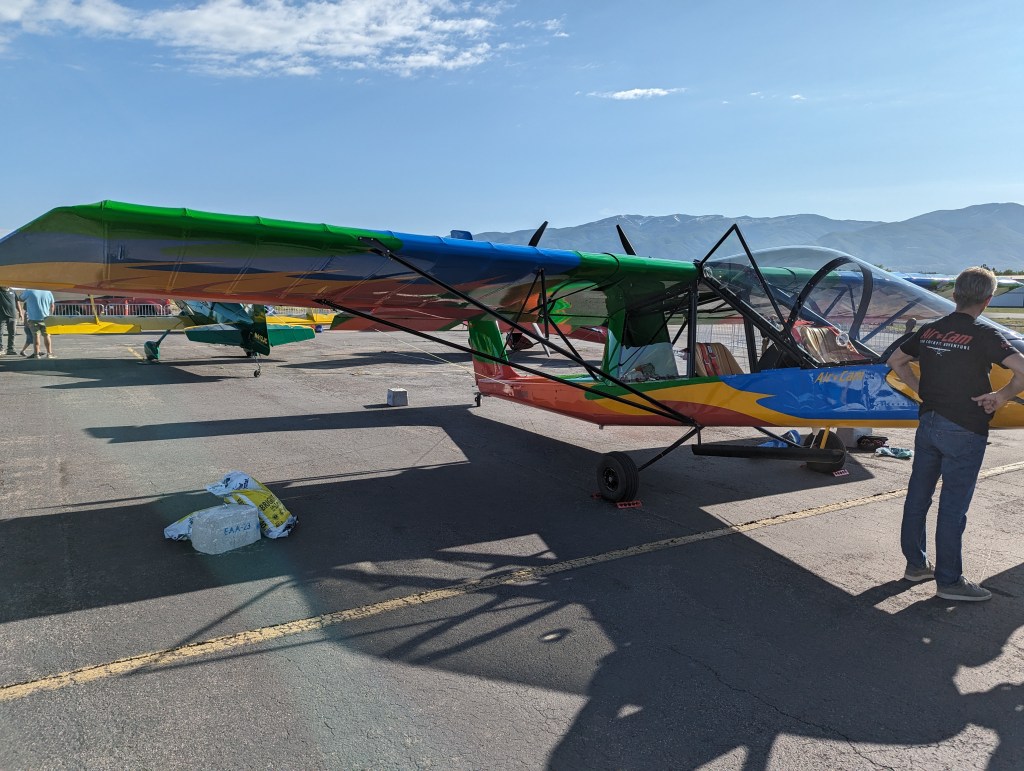
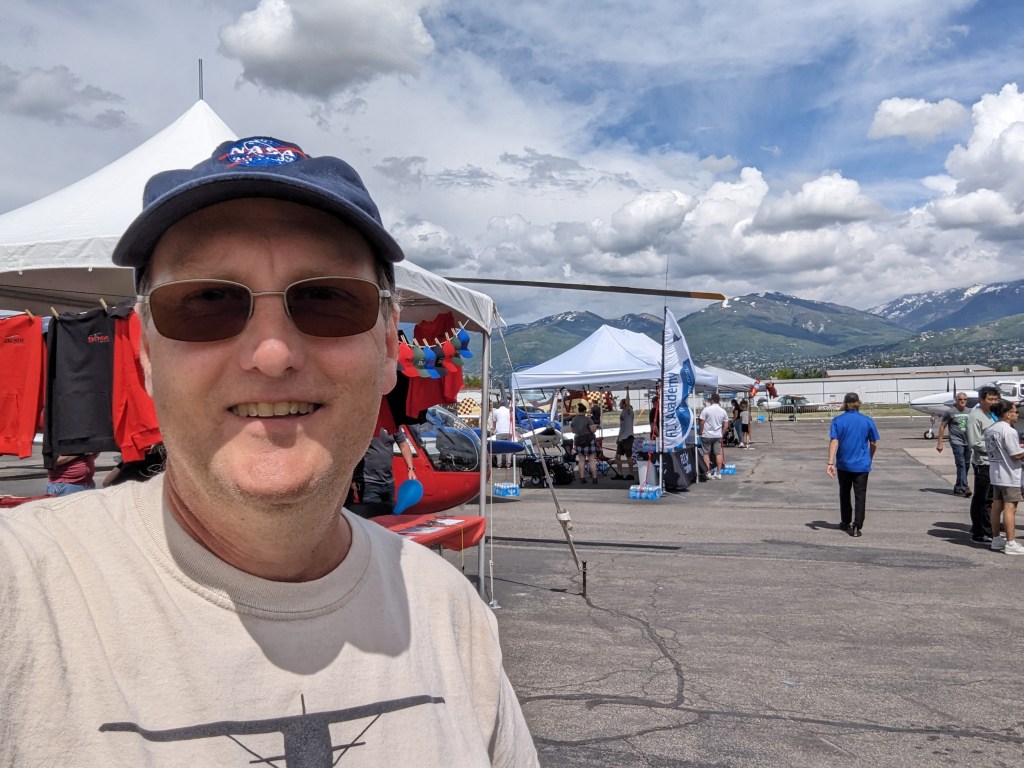
I made it to festival in early afternoon thanks to an early morning start. There were lots of families and I met a lot of great people (as one usually does at an aviation festival). I saw a lot of fun machines and the drive back through NW and central Colorado was gorgeous.
I did a lot more flying in the second half of 2023 (more stories coming soon), all of which might not have been possible had I decided to brave the ice.
Small town airports are the best!

An AOG story in the best kind of “nowhere.”

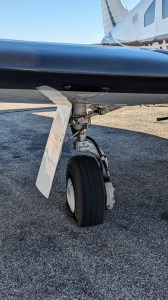
Last week, my wife and two of my kids were planning to fly from Newnan, GA (KCCO) back to Denver, about 7.5 hours in the Saratoga with a couple fuel stops planned as I could only carry 64 gal at a time due to weight. First fuel stop was in Paragould, AR, where my daughter noticed at the gas pump that we wouldn’t be going anywhere for a while. My landing was not rough, so this was certainly an unexpected surprise, but not totally unexpected, as I’d noticed the right main hadn’t been holding pressure well for a few days.

Right main flat tire

Fortunately, as I’d been near Aircraft Spruce’s eastern distribution warehouse in Peachtree City, GA, I’d picked up a spare tire and tube literally the day before. That turns out to have been a really good move. However, I don’t carry a jack in the plane and I don’t have all the knowledge to do a proper tire swap, anyway.

I called the airport manager, Roger, super nice guy, but he lamented that their on-field mechanic was out for surgery. I tried several other nearby airports, but being the Saturday of New Year’s weekend, I got a lot of answering machines. Thankfully, I spotted a couple pilots my age (OK, maybe even a bit older) pulling a beautiful C140 into their hangar. I noticed workbenches in the hangar and a spark of hope arose. I introduced myself and my predicament and asked if I could borrow a jack. “Do you have tools?” they asked. “Yes, but probably not exactly the tools I would need. “Let’s take a look.” These kind gentlemen spent the next hour and a half jacking the wing, replacing the tire and tube with my spares, and re-attaching the brake shoes (with freer wheel rotation than before, I dare say). One of them was certainly an A&P, though not currently practicing.

We encountered a few hiccups. The jack wasn’t quite tall enough, but airport manager Roger, following my call, had decided to stop by and check in on me. He had a pallet so that solved that problem.

The jack didn’t want to retract from the initial lift, but we hunched under the wing and lifted with our backs to take pressure off the jack. Then the jack with pallet was slightly too tall. Back under the wing and lift again…

Roger was kind enough to let us use the airport maintenance hangar for warmth to fit the tube in the tire and the three men worked together like a surgeon with skilled nurses anticipating the need for every tool: socket and opposing wrenches, needlenose pliers, valve stem puller, talcum powder, air compressor, wrenches again, DONE!

It was just a treat to watch these guys, and of course, I’m super thankful they were willing to give up a couple hours of their Saturday morning to get me back in the air. They asked for no payment and wouldn’t even let me buy them lunch. Thanks again, guys!

One of the things I truly love about flying is the sense of community, and the smaller the airport, the better, it seems. I no doubt fared better than I would have at one of the big-name FBOs under a class Charlie. Often they don’t have mechanics, either, and certainly not on a holiday weekend.

“Dad, you’re the luckiest unlucky person I know.”

My daughter

Indeed I do feel lucky, but more than that, I see it as yet another example of how a loving God takes care of me all the time. I had my plans and my reasons for picking Paragould, AR as my first stop (cheap gas!), but God knew exactly what I would need that fine Saturday morning. In exchange for a minor inconvenience, I was blessed with the kindness and generosity of total strangers. In our ever-changing world, that feels pretty priceless.

Classiest pilot lounge ever

S68 Orofino, ID

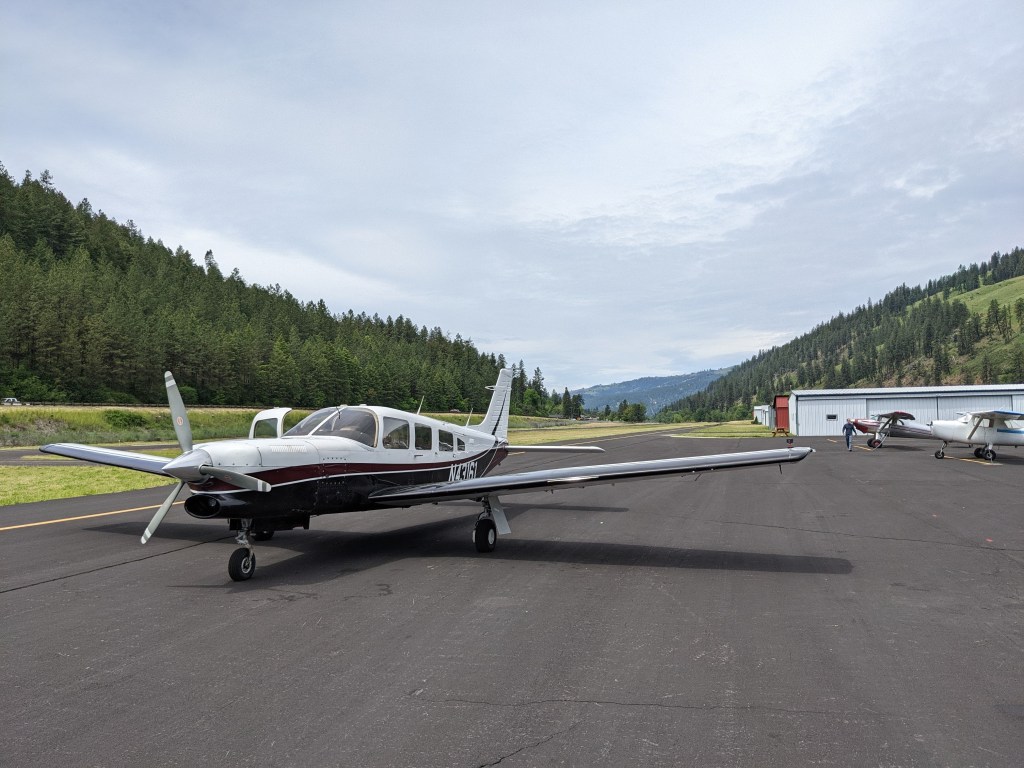
I originally found this airport in MS Flight Simulator while looking for scenic dams and reservoirs. Last summer, I got the opportunity to actually land here in my Saratoga. What a blast to overfly nearby Dworshak Reservoir and the dam, then land over the trees on the 2,500′ paved strip right on the river!

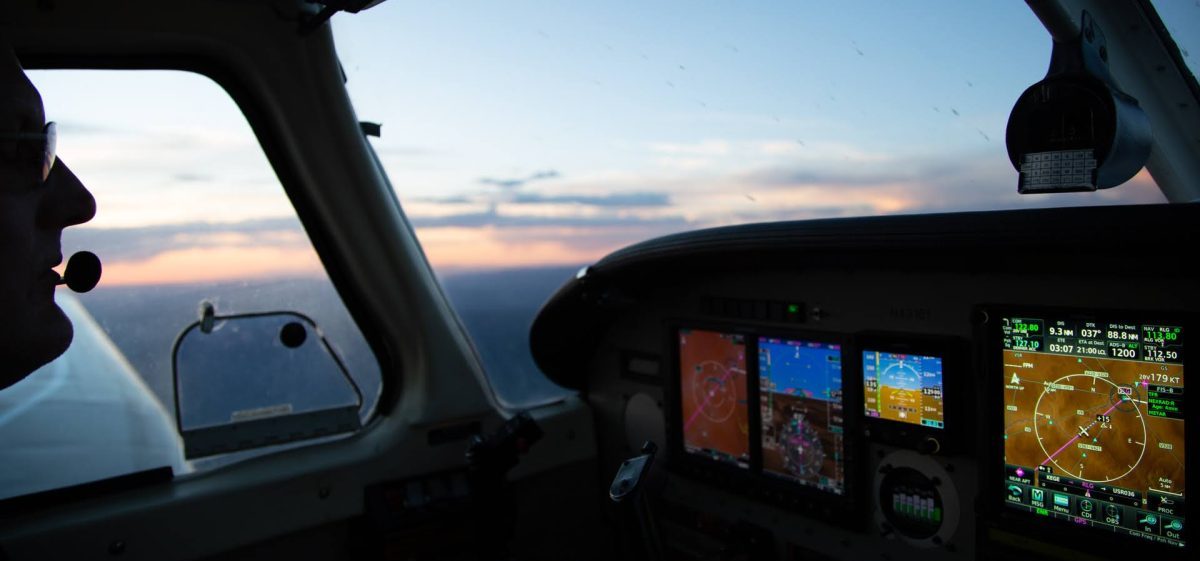
As there are no instrument approaches to provide guidance, I watched several YouTube videos of landings in larger planes to assure myself that I could get my Saratoga safely over the opposing river bank with trees and onto the runway. I also practiced short field landings with an instructor shortly before embarking on this journey. I ran the takeoff and landing numbers three times in Foreflight under different conditions with a 2x safety margin. There is no weather reporting on field, so we had to estimate winds from nearby stations and confirmed a slight headwind on the Garmin also when on final approach to Rwy 8 (video coming one of these days).

Upon landing, my friend and I were delighted to find what has to be the classiest pilot lounge I’ve seen yet, complete with a kitchenette and snack bar on the honors system. If we weren’t intent on seeing more of rugged central Idaho before the cloud decks came down, we would have stayed a lot longer.

Takeoff was equally interesting as landing. By my calculations after, we made it off in about 1,500 of 2,500 available feet of runway using the standard 25 deg flaps and short field technique. It was a warm afternoon with full tanks of fuel (cheap gas!), but the field elevation is only 1,005′ and I’m quite used to density altitudes above 9,000′ in the turbocharged Saratoga on warm days in Denver. Low-wing aircraft do not afford easy views of the river or trees below, especially in a nose up attitude, so we relied on side views and Garmin terrain avoidance (which was barking pretty much continuously) to keep us clear of the forested river banks. The river is reasonably wide, but I would certainly hesitate to take a low-wing into a valley much narrower. As it is, the river is the only way out until you reach the surrounding plateaus about 3,000′ above the river.

If you ever get the chance, Orofino is worth the visit. Just run your numbers (including density altitude) twice to make sure you can get in and back out. Thanks to all the folks who maintain such a beautiful and inviting stop for pilots!